(Phenom 300E, Citation CJ4)
Light jet charter
A light jet is the usual choice for two to six people flying up to about four hours. Indicative rates are about £2,800–£3,800 per flight hour, with 4–7 passenger seats and a practical range of about 1,700 nautical miles. That covers London to Nice, Ibiza or Mykonos, New York to Miami and Johannesburg to Cape Town non-stop. Light jets are faster and fly higher than turboprops, but have less cabin and baggage space than midsize jets.
- Seats
- 4–7
- Range
- 1,700 nm
- Cruise (block)
- 400 kt
- Per hour
- from £2,800
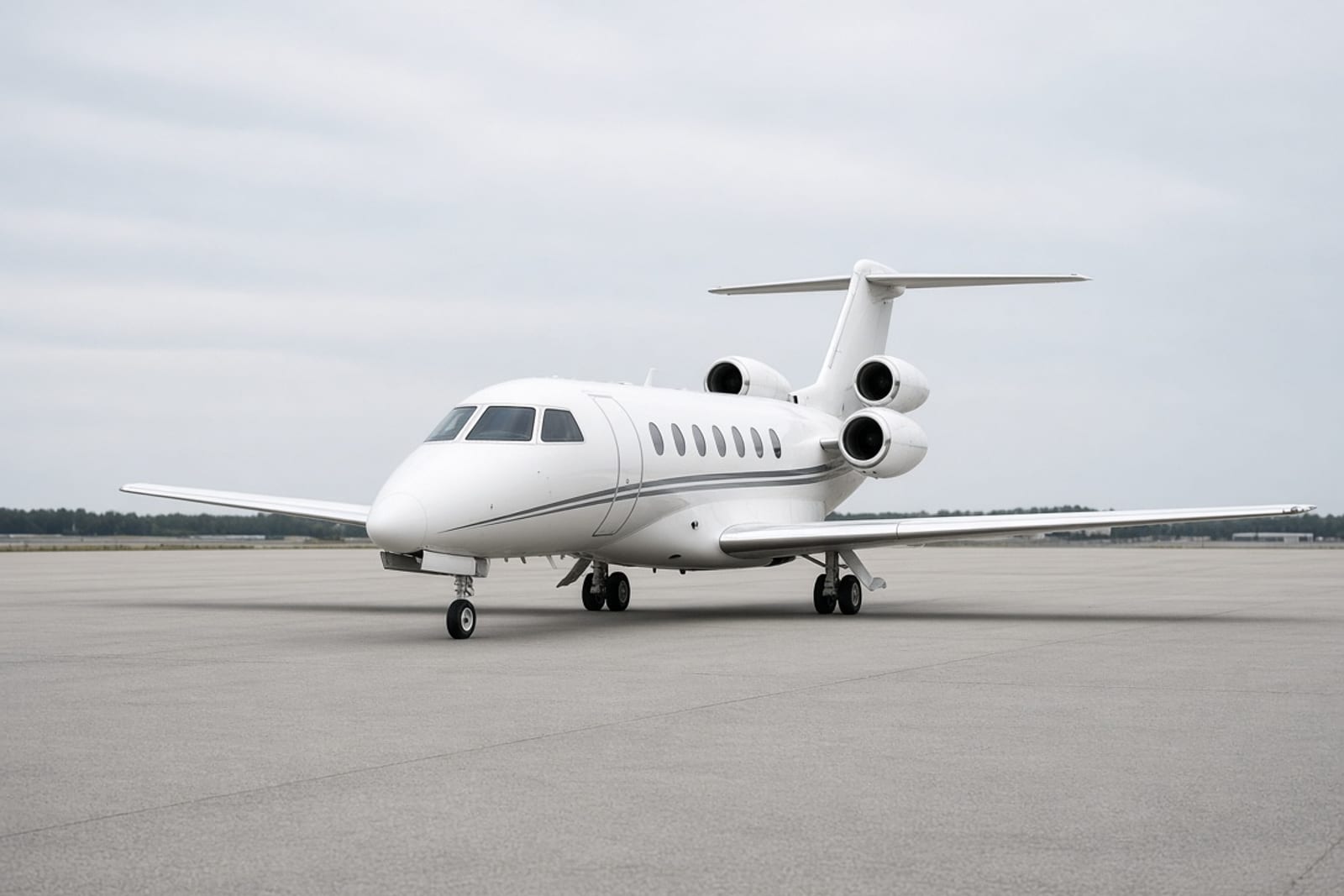
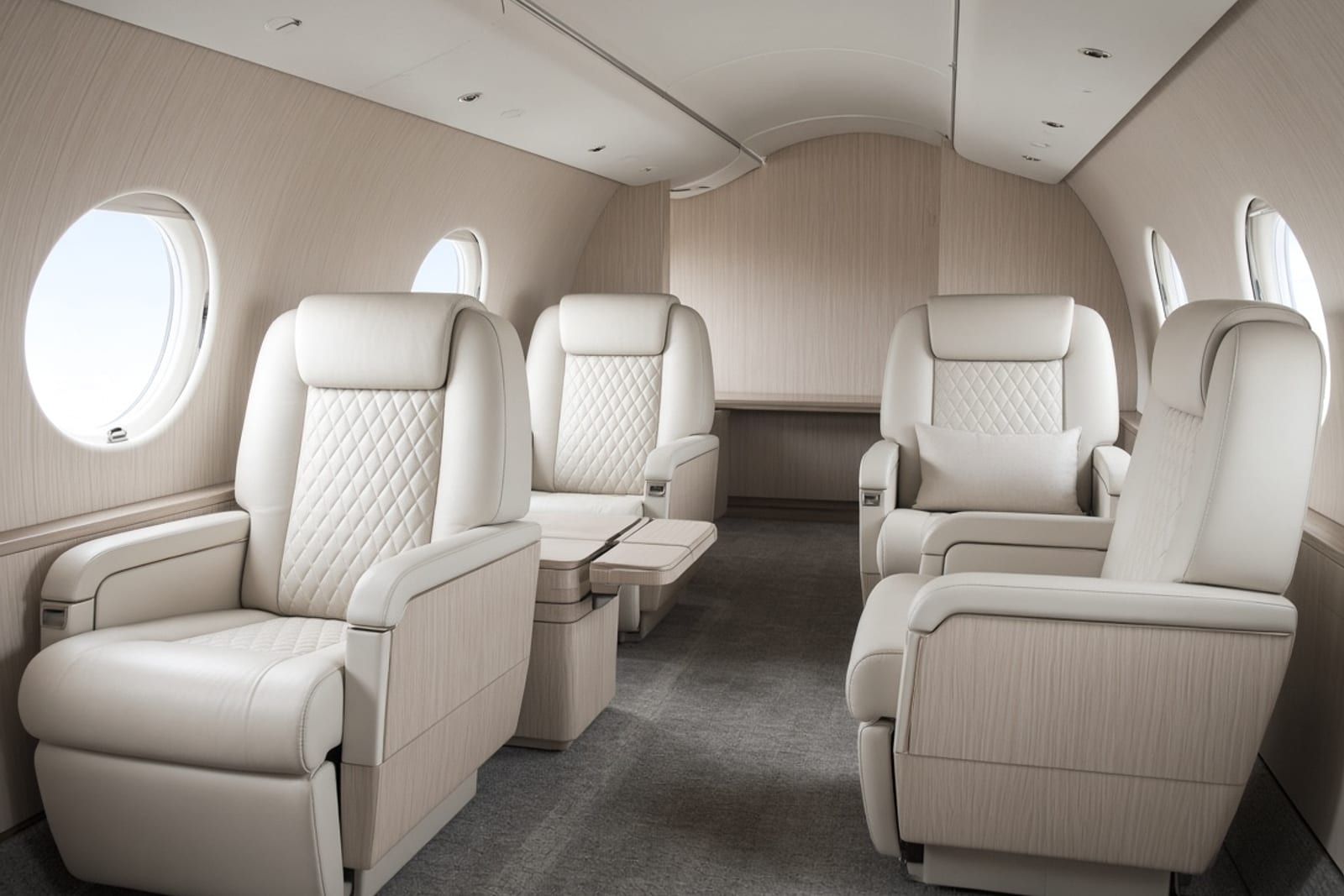
Popular light jet models
| Model | Seats | Range | Good to know |
|---|---|---|---|
| Embraer Phenom 300E | up to 10 occupants with optional seating (typically 6–7 passengers) | 2,010 nm | Embraer's range figure assumes five occupants and NBAA IFR reserves; a common charter jet in Europe and the US. |
| Cessna Citation CJ4 Gen2 | up to 10 passengers (typically 7–8) | 2,165 nm | Largest of the Citation CJ family, with a maximum cruise of about 451 knots and a 45,000 ft ceiling. |
| Cessna Citation CJ3 Gen2 | up to 9 occupants (typically 6 passengers) | 2,040 nm | Slightly smaller cabin than the CJ4, certified for single-pilot operation. |
When to choose a light jet
A light jet suits a small group on a trip of one to four hours. It cruises at roughly 400 knots block speed in our model, so it is clearly faster than a turboprop on anything over an hour, while its hourly rate stays well below a midsize jet. For a family weekend in the Mediterranean or a business day trip between two cities, it is often the best balance of price and time.
Light jets are less suited to long sectors with a full cabin. The published ranges of around 2,000 nautical miles assume a light load and good conditions; with six passengers and bags, our practical figure of about 1,700 nm is closer to what operators will plan. Beyond that you will need a fuel stop, and once a stop is involved a midsize or super-midsize jet is usually worth comparing.
Non-stop routes from London, Lagos, New York and Johannesburg
From London (Farnborough in our model), a light jet reaches Nice in about 1 hour 46 minutes (from about £7,000–£10,000 one way), Ibiza in about 2 hours 16 minutes (£9,000–£12,500) and Mykonos non-stop in about 3 hours 56 minutes (£15,500–£22,000), which a turboprop cannot do without a stop. Geneva is about 1 hour 22 minutes (£5,500–£7,500).
From New York (Teterboro), Miami is about 2 hours 47 minutes (£11,000–£15,500), Palm Beach about 2 hours 40 minutes (£10,500–£15,000) and Chicago about 1 hour 56 minutes (£7,500–£10,500). Aspen needs a fuel stop in a light jet, while a midsize jet flies it non-stop. US charter flights are operated by FAA Part 135 certificated carriers.
From Lagos, a light jet flies to Abuja in about 1 hour 01 minute or Accra in about 52 minutes, from about £4,000–£5,500 one way. Lagos to London is possible only with one fuel stop, taking about 8 hours 07 minutes (£32,000–£45,000); a super-midsize jet does it non-stop in about 6 hours 27 minutes. In Nigeria, only operators holding an NCAA Air Operator Certificate may fly charter, and only aircraft listed on it. From Johannesburg (Lanseria), Cape Town is about 2 hours 06 minutes (£8,000–£11,500) and Victoria Falls about 1 hour 34 minutes (£6,000–£8,500).
Cabin, baggage and runway trade-offs
In a light jet you sit in club seats facing each other, usually four in the main section plus one or two extra seats. Most adults cannot stand fully upright, and the toilet is a small enclosed space at the rear. Baggage space is the main limit: four people with soft bags are easy, six people with hard suitcases, skis or golf clubs may not fit, so give the operator a list.
In our planning model, light jets need runways of about 4,000 feet or more, which still opens many smaller airports. Hot weather and high elevation reduce take-off performance, so on routes such as Johannesburg, which sits high above sea level, the operator may limit fuel or passengers on a hot afternoon.
What drives the price
The hourly rate of about £2,800–£3,800 depends on the model, its age and the operator. Newer aircraft such as the Phenom 300E and CJ4 sit at the upper end. The daily minimum is one billable hour, so very short hops cost about the same as a one-hour flight.
One-way trips include an allowance for the aircraft returning to base, which is why a return on the same or the next day often costs less than two one-way trips. Airport, handling and passenger charges, overnight crew costs and de-icing in winter all add to the total. Empty-leg flights can be cheaper but depend on another client's schedule. All figures are indicative until an operator confirms them in writing.
Routes a light jet flies non-stop
FABNCE
 LondonNice

London to Nice
FABIBZ
LondonIbiza
London to Ibiza
FABGVA
LondonGeneva
London to Geneva
FABLBG
LondonParisLondon to Paris
FABPMI
LondonPalmaLondon to Palma
FABJMK
LondonMykonos
London to Mykonos
Light jet questions
01How much is a light jet per hour?
Indicatively about £2,800–£3,800 per flight hour. A one-way trip from London to Nice comes out from about £7,000–£10,000 in our model.
02How far can a light jet fly without stopping?
Plan on about 1,700 nautical miles, or roughly three and a half to four hours, with a normal load. Manufacturers quote around 2,000 nm, but only with a light cabin and ideal conditions.
03How many passengers does a light jet take?
Usually 4 to 7. Some models are certified for more seats, but charter layouts favour fewer, more comfortable seats.
04Can a light jet fly from Lagos to London?
Only with one fuel stop, taking about 8 hours 07 minutes in our model. A super-midsize or larger jet flies it non-stop.
05Is a light jet cheaper than a turboprop?
The hourly rate is higher, but a light jet is faster. On flights of two hours or more the total is often similar, and the jet saves time.
06Can I bring my dog on a light jet?
Often yes, in the cabin, if the operator agrees and your pet meets the entry rules of the destination. Light jet cabins are small, so tell us the size of your dog. Pets flying into Great Britain must travel on an approved route into an airport that can check them.
07How do I know a light jet operator is safe?
The aircraft operator is named in your charter agreement, and we check it holds a valid air operator certificate and insurance before you fly. The certificate must list the aircraft you will fly. You can ask to see the certificate and insurance and, if you prefer, we only quote operators with an independent ARGUS or Wyvern audit. RoutePass is a broker and does not operate aircraft.
Keep reading
Prices by country
Guides
Tell us where you are going
Send your trip and get a confirmed quote from vetted operators on WhatsApp.