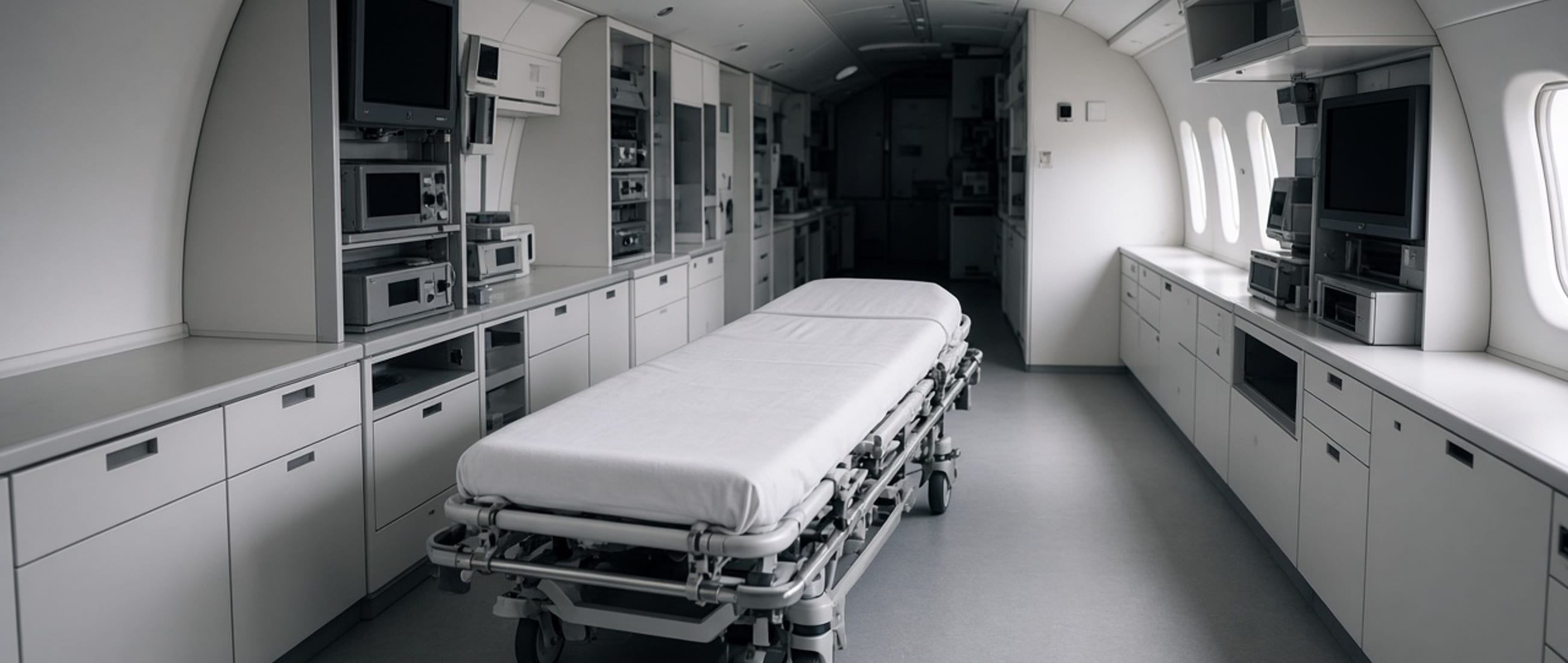
Air ambulance cost at a glance
Prices for private air ambulances are quoted flight by flight, so published figures are a guide rather than a price list. The most reliable numbers come from insurers and specialist firms that see real invoices:
Staysure, a UK travel insurer, reported an average air ambulance repatriation from Spain of £39,051 in 2023 (28 cases) and £45,137 in 2024 (33 cases), with the most expensive Spanish case at £99,609. Across all destinations its average was £58,012 in 2024, and its most expensive repatriation that year cost £192,212.
The law firm Stewarts puts a typical mainland Europe to UK air ambulance at around £40,000 and notes that long-haul repatriations from the US or Asia can exceed £150,000 (October 2025). One UK operator, IAS Medical, publishes guide prices from Spain of about £17,000 from Alicante, Palma or Menorca and about £19,000 from Almería, Granada or Málaga, which shows how much prices vary with the provider, the aircraft and the medical needs.
There is no reliable public price list for flights from Africa or the Gulf to the UK. These are long-range missions, often in a mid-size or long-range jet with crew rest built in, and they are quoted individually. Ask for a written quote that lists exactly what is included.
Is an air ambulance free in the UK?
The helicopter air ambulances you see at accidents in the UK are run by charities, working alongside the NHS. They are funded largely by donations rather than by the patients they fly, and they only respond to emergencies called in through the 999 system.
A private air ambulance is different: it is a fixed-wing aircraft, usually a jet or turboprop, chartered to move a patient between hospitals or countries, most often to bring someone home from abroad. It is booked and paid for by the patient, their family, an insurer or an employer, and it is never part of the emergency service.
What drives the price
Distance and flight time are the biggest factor. A two-hour flight from Spain needs a smaller aircraft and one crew; a flight from Lagos, Nairobi or Dubai to London takes six to eight hours or more and may need a larger jet, a fuel stop or a rested second crew.
The aircraft and medical team come next. A stretcher patient who is stable can fly with a nurse or paramedic; a patient in intensive care needs a doctor, a ventilator and an ICU-equipped aircraft, which costs considerably more. Specialist equipment such as an incubator for a newborn adds to the price.
The whole journey is priced, not just the flight. A quote normally covers positioning the aircraft to collect the patient, the medical team, ground ambulances at both ends, landing, handling and permit fees, and, for longer missions, crew rest and hotel nights. Going to the patient's home hospital rather than the nearest suitable one can also add cost.
Urgency matters too. A same-day departure leaves less choice of aircraft than a flight planned two days ahead, and a flight can only leave once the receiving hospital has confirmed a bed and the treating doctor has declared the patient fit to fly.
Cheaper alternatives: commercial stretcher and medical escort
Not every patient needs a dedicated air ambulance. A medical escort, a nurse or doctor travelling with the patient in a normal airline seat, is usually the least expensive option for someone who can sit up and needs care or supervision on the way.
A commercial stretcher is the middle option: the airline fits a stretcher, usually at the back of the cabin, which takes the space of several rows, and the patient travels with a medical escort. Airlines must approve each case through a medical information form (MEDIF) signed by the treating doctor, and fewer airlines offer stretchers than in the past. Approval can take days, the flight times are the airline's, and the patient still needs ground ambulances at each end.
A dedicated air ambulance is the right choice when the patient is unstable, needs intensive care, cannot wait for an airline's approval, or is somewhere scheduled flights cannot serve well. The medical team decides which option is safe; the price comes second.
What insurance and the GHIC cover
Travel insurance usually covers medical repatriation, but only when the policy includes it and the conditions are met. Undisclosed pre-existing conditions are a common reason for a claim to be refused, so check the policy wording and call the insurer's emergency line before arranging anything. The insurer's assistance company will usually organise the flight itself.
The UK Global Health Insurance Card (GHIC) and the older EHIC give access to state healthcare in some countries, but they do not cover the cost of bringing you back to the UK. GOV.UK and the NHS both state this, and the NHS says the GHIC does not replace travel insurance.
If there is no insurance, the family or employer pays. Providers normally ask for payment, or a guarantee from an insurer or employer, before the aircraft departs, so it helps to know who is paying before the medical team is ready.
How a medical repatriation is arranged
A medical repatriation follows the same steps whoever arranges it:
- Medical report: The treating hospital provides an up-to-date medical report and a fit-to-fly assessment.
- Bed at home: A hospital in the UK, or wherever the patient is going, confirms it will accept them.
- Options and quote: The provider proposes the safest option, a medical escort, commercial stretcher or air ambulance, and quotes the whole journey.
- Permits and documents: The operator arranges landing permits; the patient and any companion need passports and, where required, visas.
- Bed to bed: A ground ambulance takes the patient to the aircraft and from the arrival airport to the receiving hospital.
Repatriation from Africa and the Gulf
Flights from West, East and Southern Africa to the UK or Europe are long-range missions. They need an aircraft with the range for the route, landing permits that can take time to issue outside working hours, and careful planning at airports where specialist ground equipment may be limited. In Kenya, AMREF Flying Doctors provides air ambulance flights within East Africa and offers a membership scheme for evacuations inside the country.
Flights within Africa, for example to a hospital in Nairobi or Johannesburg, are often the first step before a longer flight home. RoutePass arranges air ambulance and medical flights with licensed air ambulance operators; the medical decisions are always made by their doctors and the treating hospital.
Choosing a provider
The UK Foreign, Commonwealth and Development Office publishes a list of medical repatriation companies in the UK, without endorsing any, and advises asking for the full cost and exactly what is included. Ask who operates the aircraft and holds its air operator certificate, what medical team will fly, whether ground ambulances and bed-to-bed care are included, and how many companions can travel. Usually one companion can fly, at the medical director's discretion.