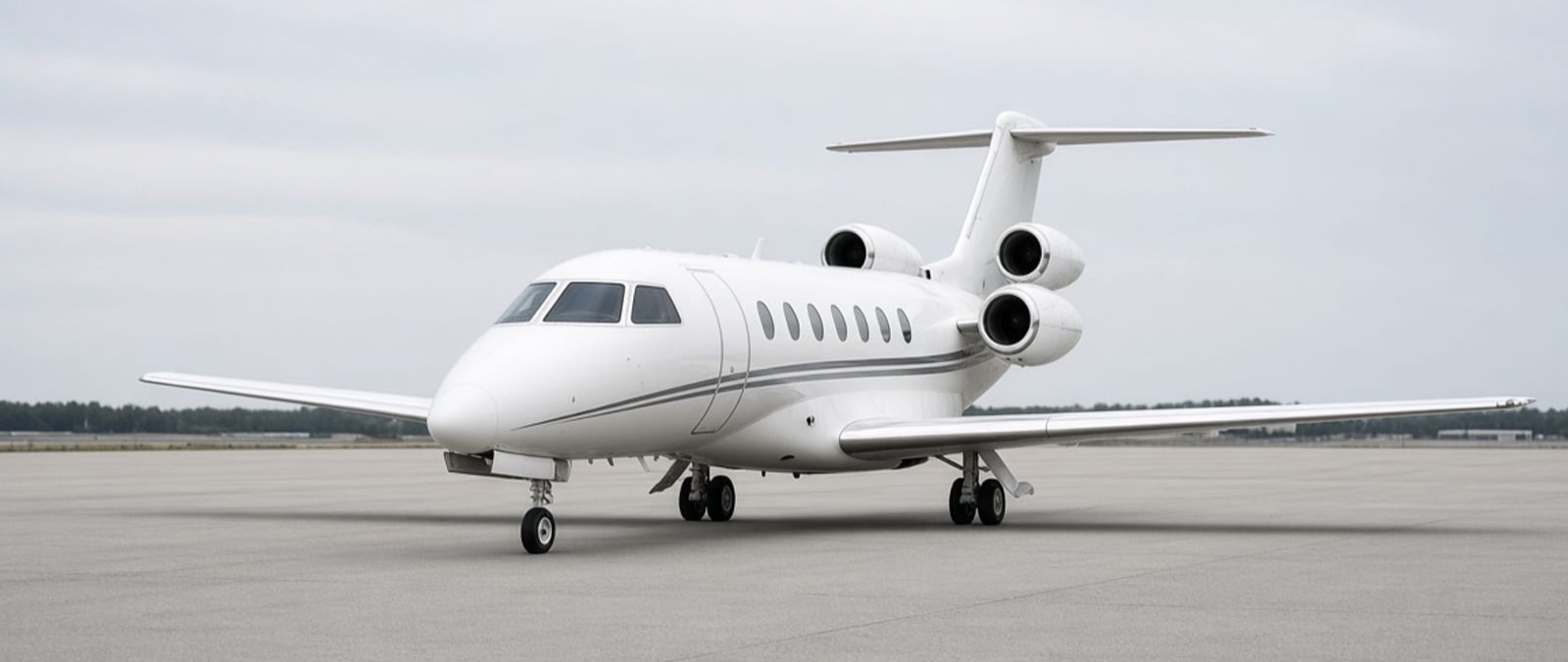
Space and weight, not a per-person limit
Airlines limit each passenger to a number of bags and kilograms. A charter flight works differently. The operator knows the aircraft's baggage compartment size and its weight limits, and what you can bring depends on the aircraft, the route and the number of people. Four passengers with one soft bag each use far less room than four with large hard cases.
There are two limits. The first is volume: bags must physically fit in the hold, and through its door. The second is weight: every aircraft has a maximum take-off weight, and passengers, bags and fuel all count towards it. On short flights this rarely bites. On long legs, fuel takes up most of the margin, so the weight of luggage matters more. The pilot decides before departure what can be carried.
How much each type of jet can hold
Baggage volume varies by size of aircraft. The figures below are the total baggage volume that RoutePass's aircraft model pages give for each example, taken from manufacturer specifications. Volume is not the whole story, because the shape of the compartment, the door size and any weight limit also count, but it is a useful comparison.
- Turboprop: Pilatus PC-12 NGX, 40 cubic feet.
- Light: Embraer Phenom 300E, 84 cubic feet; Cessna Citation CJ4 Gen2, 77.1 cubic feet.
- Midsize: Cessna Citation XLS Gen2, 90.2 cubic feet; Cessna Citation Latitude, 127 cubic feet.
- Super-midsize: Bombardier Challenger 3500, 106 cubic feet; Embraer Praetor 600, 155 cubic feet.
- Heavy: Dassault Falcon 2000LXS, 130.6 cubic feet.
- Ultra-long-range: Bombardier Global 7500 and Gulfstream G650ER, 195 cubic feet each.
Planning for a trip with different bag types
A useful way to plan is to sort the luggage into three groups. The first is checked-style bags that go in the hold for the whole trip. The second is the small bag each person keeps in the cabin, which holds documents, medication and chargers. The third is anything oversized or unusual, which needs its own check with the operator.
Share a rough packing list rather than a guess. A party of six on a weekend away may bring six soft bags and a couple of coats. A family on a two-week holiday might bring ten large cases, a pram and a golf bag. These are very different loads, and the right aircraft category is not the same for both. A midsize jet may handle the first. The second may need a super-midsize or heavy jet, or some luggage sent ahead.
If the numbers do not fit, there are ways to change the plan. You can pack lighter, send some luggage ahead by courier, or pick a larger aircraft. Ask the broker to price each option rather than assuming. The aircraft with the largest hold is not always the one that suits the route, since the choice also depends on range, runway and seats.
Soft bags, hard cases and awkward shapes
Soft-sided bags are easier to load because they can be squeezed into the gaps. Rigid suitcases are fine, but a large, hard case takes a fixed block of space. If you have a choice, bring several smaller bags rather than a few very large ones. Keep each bag to a weight one person can lift: ground handlers load by hand, and an overweight bag can be refused.
Skis, snowboards, golf bags and surfboards are common on private flights. Many aircraft can carry them, but the compartment's length and door size decide. A long ski bag can fit in the cabin on some aircraft, while a surfboard may need a larger jet. Give the length in centimetres or inches when you ask. Bicycles, large musical instruments and sports equipment should be raised in the first message, as should anything with batteries.
Dangerous goods are restricted on any aircraft. Lithium batteries, aerosols, fuel, gas cylinders and firearms have specific rules, and firearms need separate permission. Ask the operator before packing them.
Cabin access and what to keep with you
Whether you can reach the baggage compartment in flight depends on the model. On some aircraft it opens from the cabin, and on others it can be reached only from outside on the ground. Ask which applies to your aircraft. Keep anything you need on board with you: passports, medication, a laptop, chargers, a coat and children's items.
A manufacturer's total can combine more than one compartment, so not all of it is a single open space.
The weight and fuel trade-off on long legs
On a long flight, the aircraft carries nearly all the fuel it can. Adding passengers and bags can push it towards the maximum take-off weight, and the operator may have to reduce the load or add a fuel stop. That is why a trans-Atlantic quote may ask for exact bag counts and an estimate of weight.
Weather, runway length and temperature also affect the limit, so the same aircraft can carry more on a cool day than a hot one. If you are close to the limit, the operator may suggest a larger category. The flight time calculator shows how long a route takes, and the aircraft pages show the range of each category.
What to send your broker
When you request a quote, send the following so the operator can check the hold before you travel:
- The number of bags and their type, soft or hard, with approximate dimensions.
- The approximate weight of each bag, or the total.
- Any sports gear with its length, such as skis, golf clubs or surfboards.
- Pets, prams or other large items, and anything fragile or restricted.
- Whether anyone will be joining at a second stop, because that can change the load.