Passports and permission to travel
Each child, however young, needs their own valid passport for international flights. A child cannot travel on a parent's passport. Check the expiry date: many countries require several months of validity beyond the trip, and a child's passport can be valid for a shorter period than an adult's.
General aviation flights are checked in advance. The operator files a General Aviation Report listing every person on board with passport details, and the names must match the passports exactly. Send clear copies of each child's passport when you book, rather than on the morning of the flight.
If a child needs a visa or an ETA for the destination, that is arranged before departure. Flying privately does not change the entry rules of the country you are visiting.
The UK ETA for non-British children
Most visitors who do not need a visa for the UK need an Electronic Travel Authorisation. gov.uk says each person travelling needs their own ETA, including babies and children, and that you can apply on someone else's behalf. The fee on gov.uk is £20 per person, so a family of five pays for five. Use the official gov.uk service and avoid websites that imitate it.
British and Irish passport holders do not need an ETA. A child with a British passport travels on it, so dual nationals should use the British passport to enter. A child from a country whose citizens need a visa still needs a visa, not an ETA. Apply for each family member well before the trip, because operators check permission to travel before departure and anyone without it should not be carried.
Travelling with one parent or a non-parent
If a child travels with one parent, a grandparent, a friend or a school group, border staff in some countries may ask who the adult is and whether the other parent agrees to the trip. The rules differ by destination, so check the government guidance of the country you are entering as well as gov.uk's travel advice for it.
The usual practice is to carry a short signed letter from the parent or parents who are not travelling. It should give the child's full name, date of birth and passport number, the travel dates and destination, and contact details for the person who signed. A copy of that parent's photo ID, the child's birth certificate and any court order for custody or travel are worth having in the bag. Keep them with the passports, not in the hold. If the parents are separated, the other parent's agreement matters even more, so sort it out well before the trip.
Tell your broker if the party includes adults who are not the child's parents, so the passenger details on the General Aviation Report are right.
Seats, infants and car seats
Rules on child seating are not the same on every charter. Aircraft operators set their own policy within the regulations that apply to them, and the answer can depend on the aircraft type, the child's age and the seat. Questions to ask through your broker include whether an infant may be held on an adult's lap and with what restraint, whether the operator allows a child restraint device (a car seat approved for use on aircraft) on a cabin seat, and whether it supplies one or you bring your own.
If you plan to bring your own seat, ask the operator whether it is acceptable, and check the label for approval and the seat's dimensions against the aircraft's seat. Not every aircraft's seats accept every child restraint, and the pilot has the final say before departure. Do not take it for granted that a seat that suits a car will fit.
Expect children to be belted in for take-off, landing and turbulence, as adults are, with the operator's own rules applying to how.
Cabin size, lavatories and catering
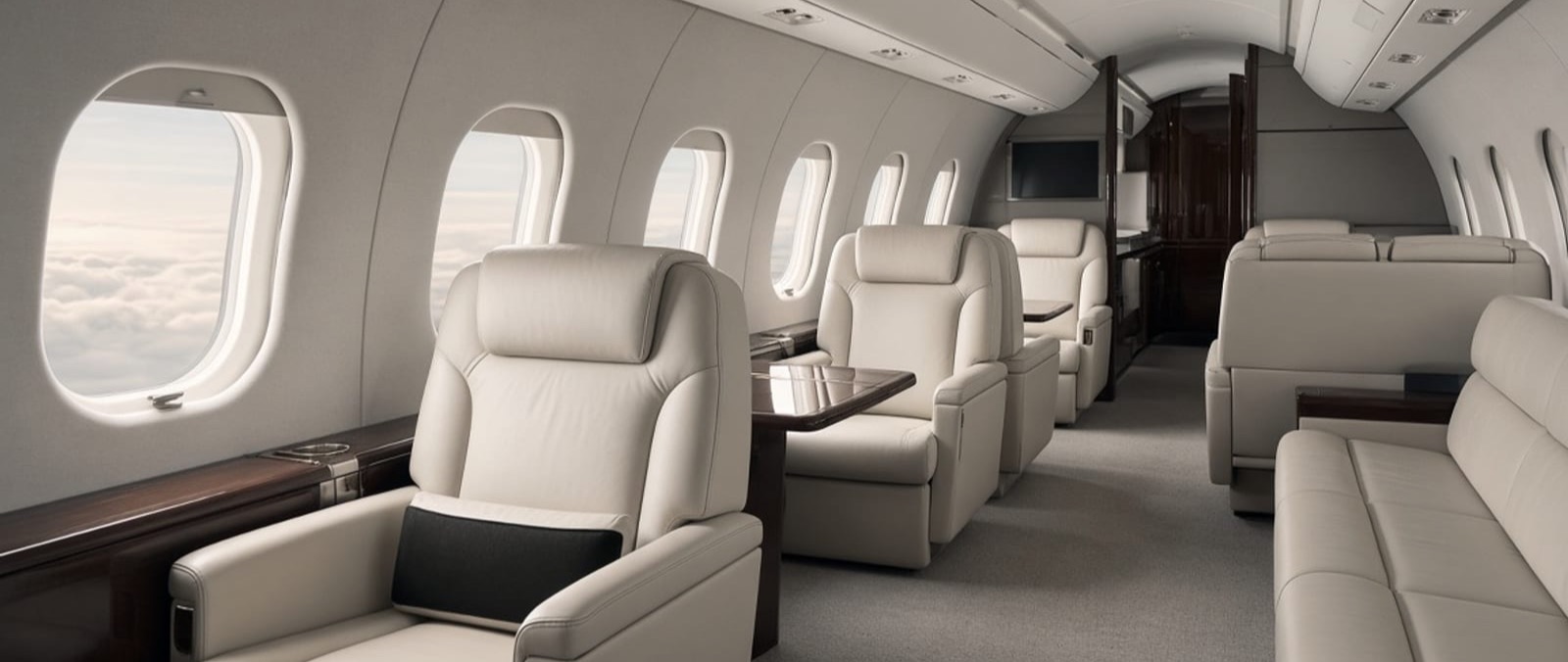
Cabin size is the main difference between jet categories for a family. A light jet is compact: the cabin is a few seats wide and you step in rather than stand, so it suits short hops with younger children. A midsize or super-midsize jet gives room to stand and a separate lavatory in many models. Heavy jets and above have larger cabins and often a proper lavatory compartment with a door, which helps on longer flights. The aircraft category pages show typical seat counts and cabin sizes.
Ask whether the lavatory is in a closed compartment or part of the cabin, and whether there is a separate toilet at all on a short-haul aircraft. On the smallest aircraft there may not be a full-height compartment, which matters with a potty-training toddler.
Catering is arranged in advance, so give the children's ages and any allergies. Snacks, familiar foods and drinks are usually welcome, and you can usually bring your own food for infants. Say so when you book so the caterer and the crew can plan around it. State allergies clearly, even for common ingredients.
Baggage, prams and the airport
Families travel with more bags than most, and the baggage hold on a smaller jet is limited in volume. Tell your broker the number of bags, the pram or buggy type and any travel cot. A folding pram usually goes in the hold; a large travel system may not fit on a light jet. The private jet baggage allowance guide explains how space works on a charter.
One practical benefit is the private terminal: you can park next to the aircraft, you are not queuing with children, and security and passport checks happen at the terminal. Arrive in line with the time the operator gives you, because the aircraft cannot wait for a late passport.
Ear pressure and a calm journey
Ear discomfort during descent is common. General tips: let babies feed or suck on a dummy during take-off and landing, give older children a drink or something to chew, and keep a child awake or settled for the descent. Do not give medicines without advice from a pharmacist or doctor, and ask your own doctor about flying with a baby, a cold or ear infection.
Bring entertainment that does not need a signal, a change of clothes and a blanket. The cabin is private, so children can move about when the seat-belt sign is off.